Sinkhole adjacent to wave wall led to identification of deep void under foundation

Basic details

Publish date

05 December 2025

Case ID#

3355

Title

Sinkhole adjacent to wave wall led to identification of deep void under foundation

Nation

England

Regulator reference no.

536

Legal status

Statutory

Reservoir type

Impounding

Reservoir capacity

25,000 - 99,999m3

Year of construction

1800 - 1849

Main construction type

Earth fill embankment

Dam height

5 - 9.99 metres

Dam flood category

B

Hazard class

High-risk reservoir

Reservoir use

  • Recreation or general amenity

Owner type

Public body

Incident details

Date & Time of incident

30 December 2024 - 12:00

Date incident closed

02 January 2025

Observations that caused the incident to be declared

  • Deformation or instability of crest (settlement, cracking, depressions)

Describe the incident

A small hole approximately 0.9m long x 0.6m wide x 0.3m deep was discovered 30.12.2024 on the west bank (dam) near the corner with the south side (not dam).

The hole was within 1 m rear of wave wall.

The supervising engineer was contacted and checks were made of the crest, embankment and downstream shoulder for any signs of leakage. None were found.

The penstock was opened to draw down the water level at 15:30 on 30.12.2024 and water level measurements taken. Current water level was 5mm over the overflow weir.

On 31.12.2024 the reservoir was inspected along with the sink hole. The water level within the reservoir had dropped to 160mm below the overflow weir and below the base of the sink hole.  After discussions with the Supervising Engineer it was agreed to close the penstock but keep the water level below the level of the sink hole until the hole was filled. Arrangements were made for the sink hole to be opened out by hand initially to find the extent of the void and then to fill the hole with clay material and compacted in 150mm layers and topped with a 100mm layer of topsoil which was carried out and competed on 02.01.2025. 

In October 2025 a coffer dam was constructed next to the location of the previous sinkhole and the wall and foundations were inspected.

The wall was found to be in a good condition however the foundations were undermined over a length of 4.5m with a void, approximately 10cm deep by 90cm wide.

After consultation with the Supervising Engineer, it was agreed to shutter off the front of the wall foundation and excavate behind the wall at this location 4.5m long by 1m wide to a depth of approximately 1.3m deep, and to fill the excavation with C30 concrete. This work was completed on 13.10.2025 and the subsequently reinstated with topsoil and grass seed.

Supporting photos

Sinkhole as it was found
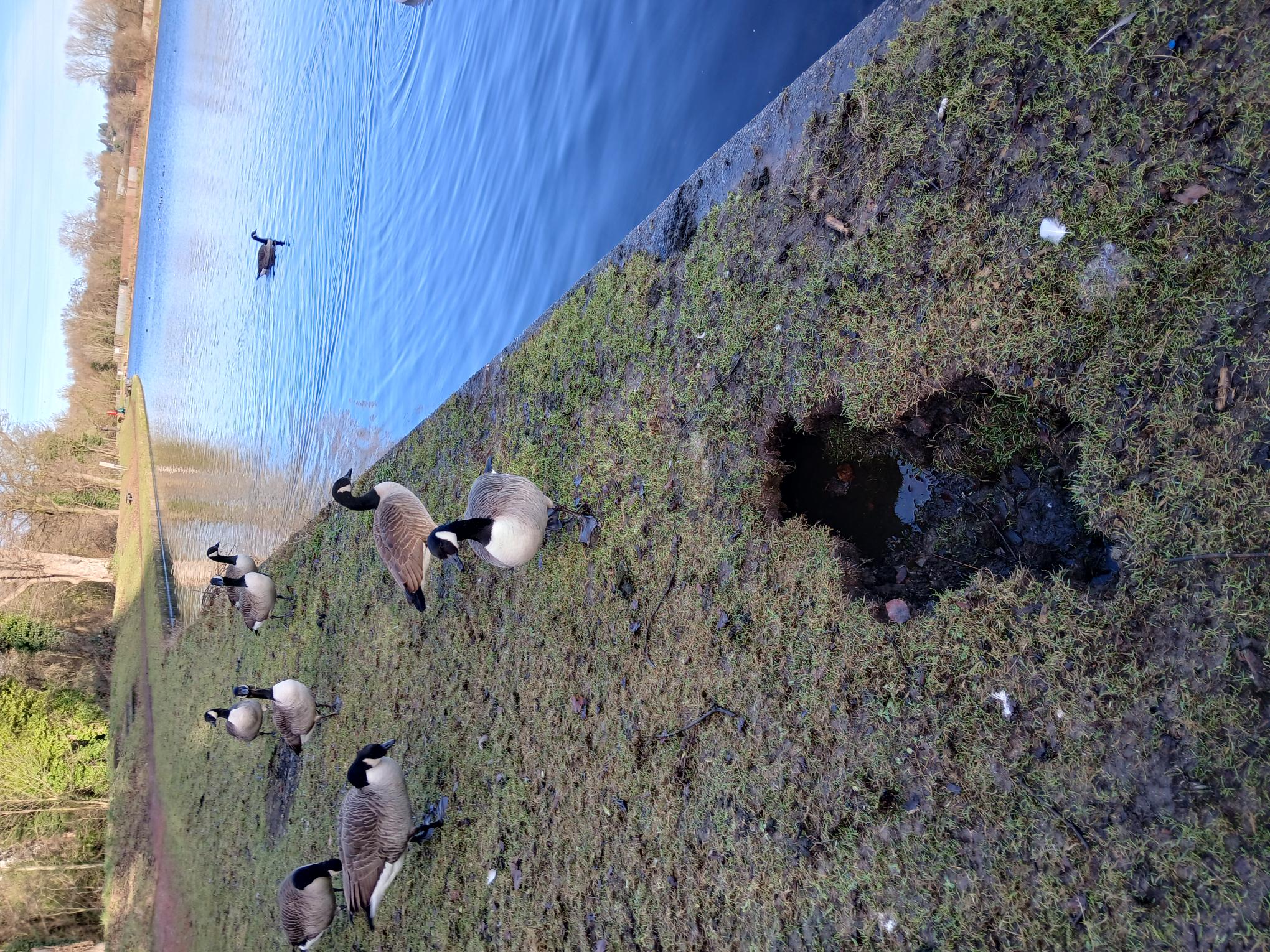
Photo of sinkhole - supporting image

Causes and impacts

Natural processes which initiated or contributed to the incident

  • Heavy/persistent rain (no flood)

What were the main contributing factors to the incident occurring?

Dam factors

  • Deterioration of materials

External factors

  • None

Shortcomings

  • Design shortcoming

What was the root cause of the incident?

The sink hole occurred on the site of an old demolished building, and it is suspected that the ground was not compacted correctly when it was demolished. Heavy persistent rain over autumn-winter 2024 may also of had a part to play - undercutting of the concrete wall foundation. Shallow foundation when built. 

Impacts on the reservoir

  • Internal erosion (fill deterioration)
  • Settlement / deformation (outside normal or expected parameters)

Supporting photos

Photo showing excavated section of wall foundation and the void found
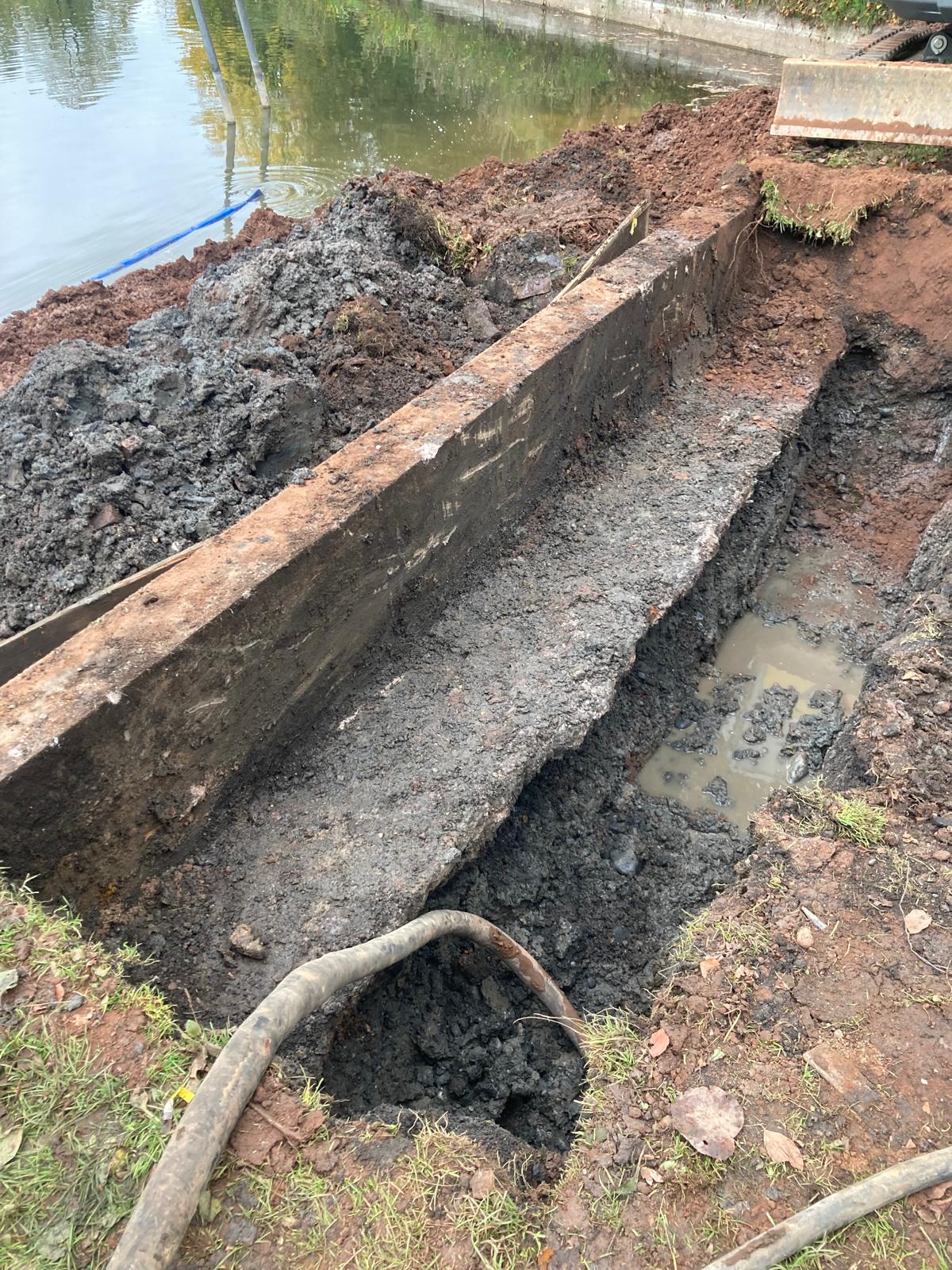
Photo showing excavated section of wall foundation and the void found - supporting image
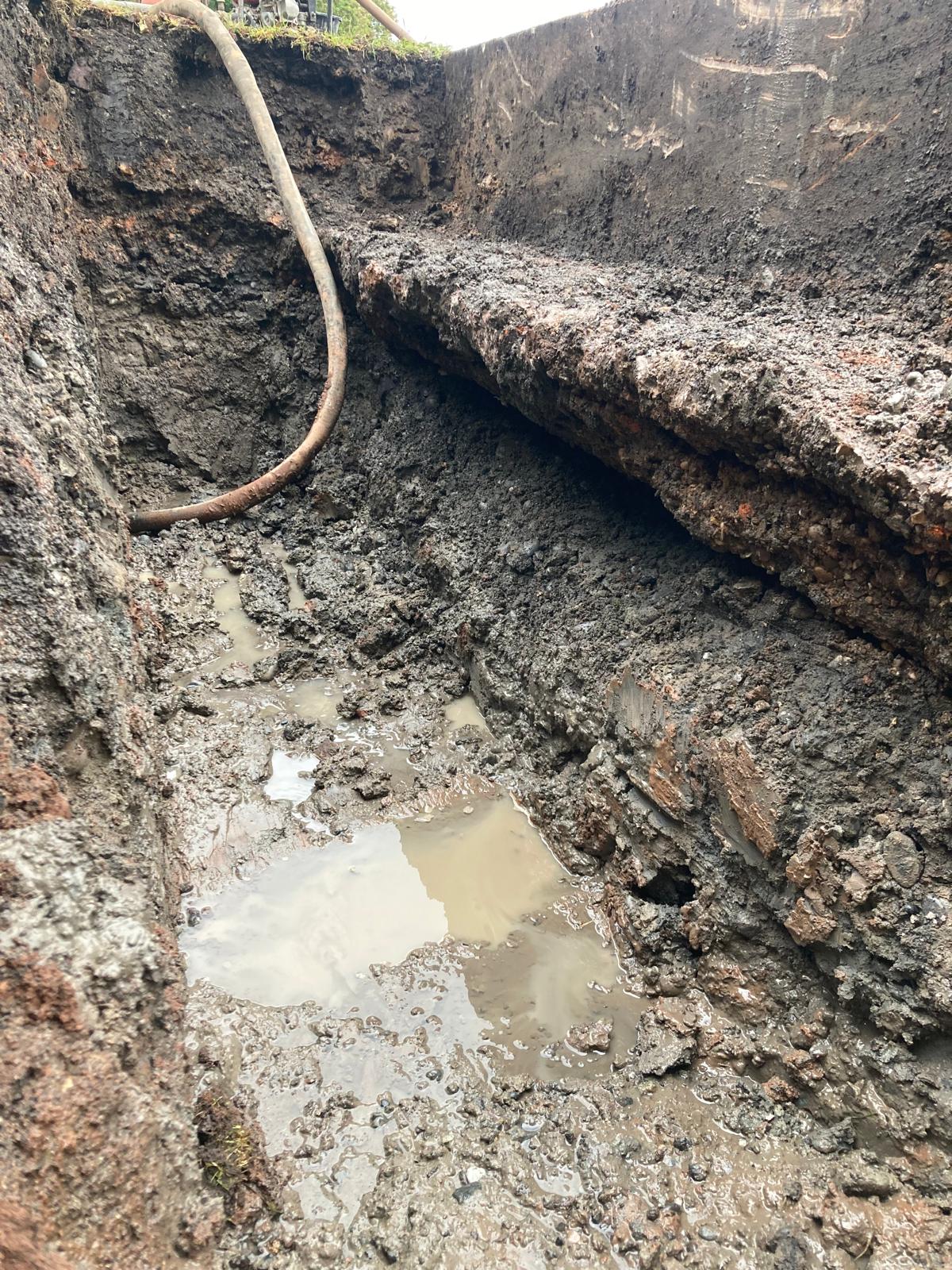
Photo showing excavated section of wall foundation and the void found
Photo showing excavated section of wall foundation and the void found - supporting image

Supporting contributions and studies

Describe any human factors which influenced the incident

None - inspection regime up to date. The reservoir is inspected on a weekly basis by grounds staff and they continued to monitor the water level in the reservoir and the position where the sink hole was.

Describe any instrumentation at the reservoir and how this was used in warning of the incident or providing monitoring during the incident

Not applicable - no instrumentation 

Was instrumentation effective leading up to and during the incident?

Not Applicable

Describe any assistance by external parties and impacts on the downstream population

None

Summary of studies or investigations undertaken

Visual inspection of the site. Erection of a coffer dam to inspect the foundations of the wall. 

Supporting photos

Photo showing concrete backfill of the wall foundation to seal the void
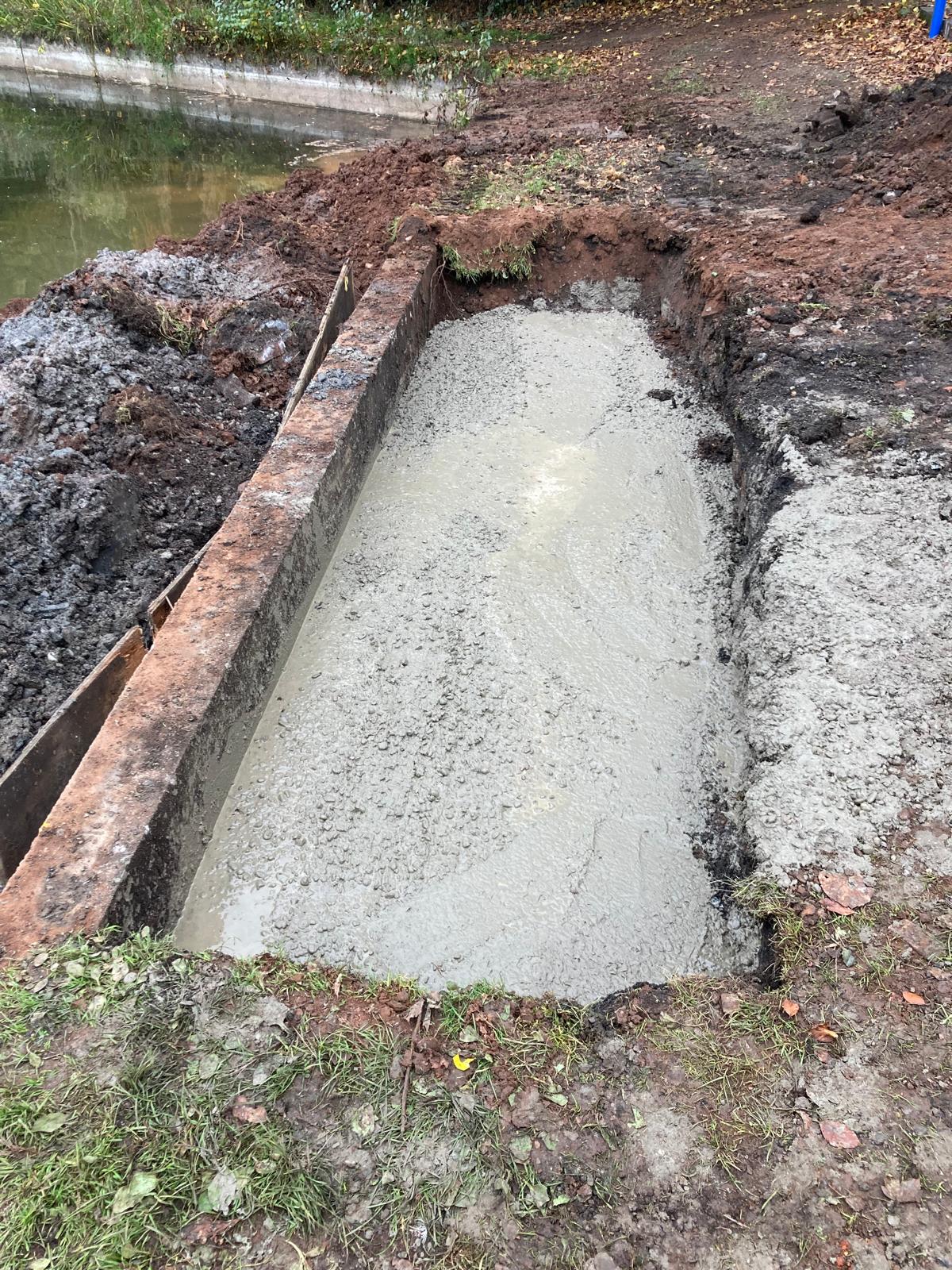
Photo showing excavated section of wall foundation and the void found - supporting image
Photo showing dam embankment following repairs
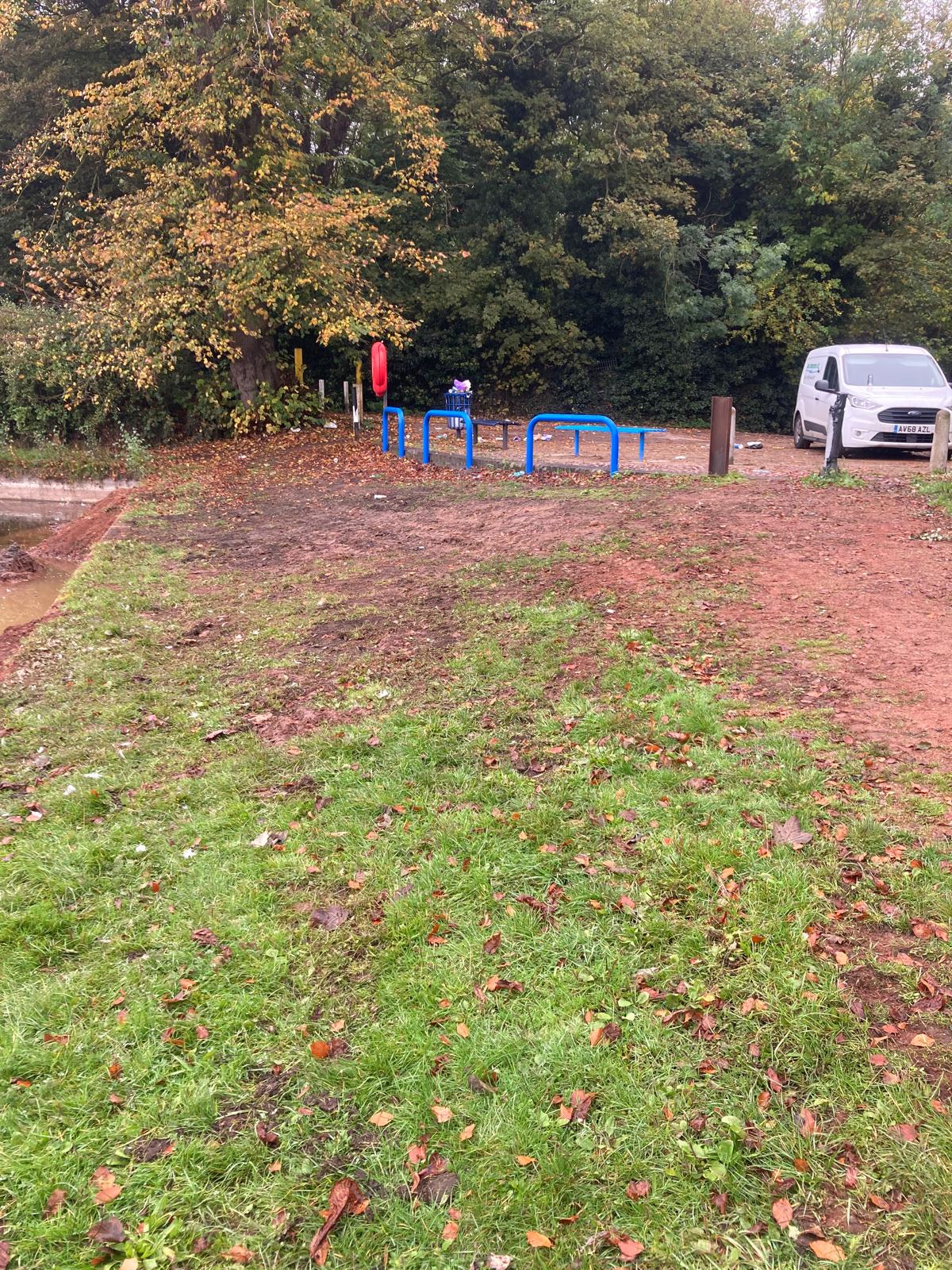
Photo showing excavated section of wall foundation and the void found - supporting image

What are the lessons learnt from the incident

Lesson 1

  • Emergency response
  • Long term seepage
  • Structural

It is important to carry out further investigations to establish a full understanding of the situation, which led to the identification of the larger void and more comprehensive repairs

Lesson 2

  • Surveillance and Monitoring

Regular surveillance patrols are important to ensure any issues are picked up quickly

Lesson 3

  • Emergency response

It is useful to forewarn relevant authorities that in an emergency situation, where there is risk to life, that a precautionary or emergency draw down can be undertaken in line with the On-Site Plan to reduce the likelihood of failure. 

Lesson 4

Closing comments

Supporting photos