Void formed around culvert following damage from flood event
Publish date
12 October 2026
Case ID#
3373
Title
Void formed around culvert following damage from flood event
Nation
England
Regulator reference no.
542
Legal status
Statutory
Reservoir type
Impounding
Reservoir capacity
500,000 - 1M m3
Year of construction
1990 - 2009
Main construction type
Earth fill embankment
Dam height
5 - 9.99 metres
Dam flood category
A
Hazard class
High-risk reservoir
Reservoir use
- Flood risk management
Owner type
Public body
Date & Time of incident
25 March 2025 - 12:00
Date incident closed
Observations that caused the incident to be declared
- Instability or failure of water retaining pipes, valves or similar structures
- Water flowing outside of engineered channels
Describe the incident
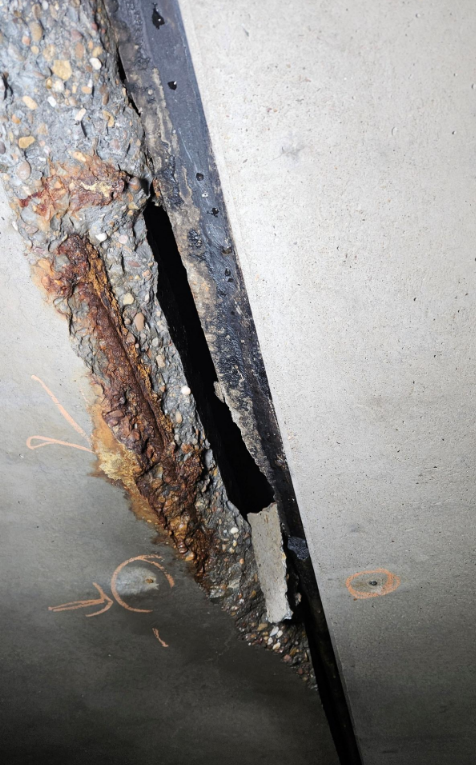
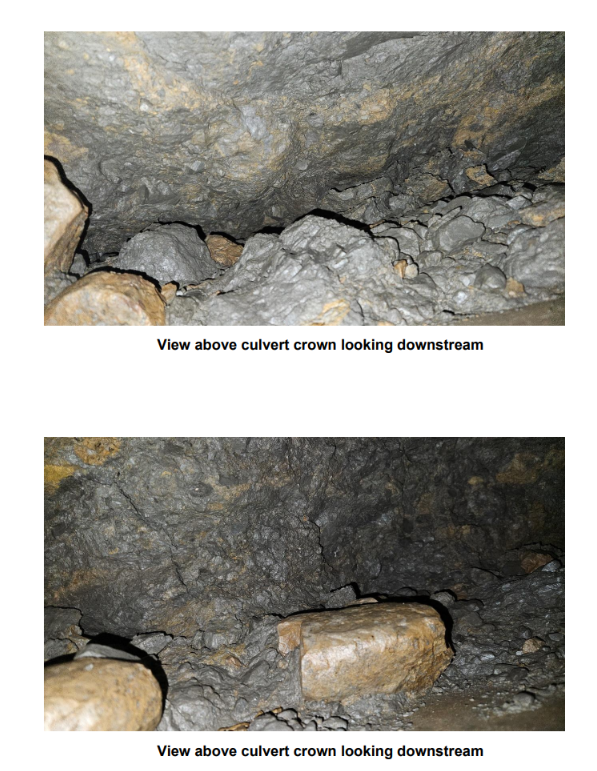
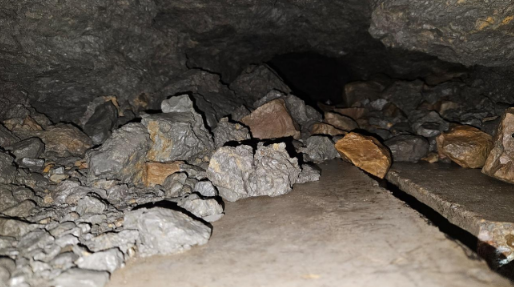
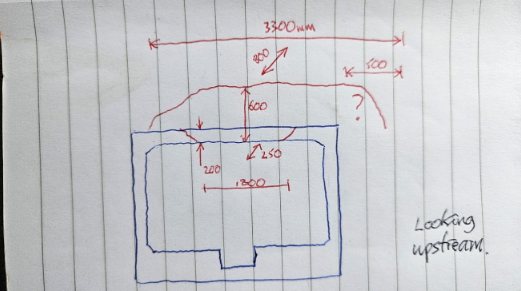
This incident was declared when, during the supervising engineer's visit, a small edge piece of a culvert joint was noticed. They pushed a camera through the hole, and exposed a large void above the culvert, initially estimated at 600mm x 3300mm x 800 mm, however the full scale of the void was unknown.
Joint movement within the dam outlet culvert has been a feature of the reservoir to monitor since since 2016. The culvert within the dam is made up of 2m long box units that fit together via a staggered or 'joggled' Z joint. Within a year of the culvert being constructed, S10 and S12 inspections noted issues with some of the joints; loss of sealant (necklacing) and movement. Monitoring of the joints was recommended and duly undertaken periodically to assess deformation and understanding possible causal factors. The culvert soffit that failed through loss of concrete on the joint edge had been noted and had been evident for at least 10 years. None of the inspection reports recommended a repair or fix, only that the joints should be monitored.
A number of confined space entries were made into the culvert by Supervising Engineer, Inspecting Engineer and contractors to assess the damage to the soffit joint and void formed as a result of the scour. This group created an action plan to deal with the immediate repairs to protect the dam from further scour. This involved adding more stop logs to the hydrobrake inlet to limit the intake flow from 10 cumecs to 8 cumecs, and sealing the hole with steel plates. These actions were delivered within 6 months of the damage being discovered. Also within this timeframe ground penetration radar survey was attempted along the full length of the culvert to ascertain if the void extended within the dam beyond the area identified. The results were inconclusive due to the steel reinforcement within the concrete box units walls. Therefore, an intrusive investigation will be undertaken to check for other voids that may have formed in the dam encasing the 40m long box culvert. A study to understand the abnormal 'full bore' operation of the culvert has been commissioned which will include downstream conditions / capacity assessment.
Supporting photos
Natural processes which initiated or contributed to the incident
What were the main contributing factors to the incident occurring?
Dam factors
- Failure or damage to pipes or culverts
External factors
Shortcomings
- Construction shortcoming
- Surveillance shortcoming
What was the root cause of the incident?
It is most likely that the void formed during the November 2024 storage event when it was noted that the culvert from the hydrobrake was running at full bore.
The void is located immediately downstream (approximately 2m) of the hydrobrake outfall. Water would have been forced upward, causing further damage to the defective culvert joint (previous S10 report indicates presence of cracking) before water under pressure carved out the void within the clay dam that surrounds the culvert. The presence of the void and the hole into it meant that the dam was unsupported above the joint and there was a risk that the dam crest could settle and deform. Also, if left unrepaired a similar sized storage event would result in further erosion and enlargement and extent of the void.
Impacts on the reservoir
- Failure or damage to tunnel or culvert
- Internal erosion (adjacent to structures)
Supporting photos
Describe any human factors which influenced the incident
Within a year of the culvert being constructed, S10 and S12 inspections noted issues with some of the joints; loss of sealant (necklacing) and movement. Monitoring of the joints was recommended and duly undertaken periodically to assess deformation and understanding possible causal factors. The culvert soffit that failed through loss of concrete on the joint edge had been noted and had been evident for atleast 10 years. None of the inspection reports recommended a repair or fix, only that the joints should be monitored.
Describe any instrumentation at the reservoir and how this was used in warning of the incident or providing monitoring during the incident
Was instrumentation effective leading up to and during the incident?
Yes
Describe any assistance by external parties and impacts on the downstream population
None
Summary of studies or investigations undertaken
An all reservoir panel engineer was appointed, the culvert was assessed and had an internal inspection. A number of confined space entries were made into the culvert by Supervising Engineer, Inspecting Engineer and contractors to assess the damage to the soffit joint and void formed as a result of the scour. This group created an action plan to deal with the immediate repairs to protect the dam from further scour. This involved adding more stop logs to the hydrobrake inlet to limit the intake flow from 10 cumecs to 8 cumecs, and sealing the hole with steel plates. These actions were delivered within 6 months of the damage being discovered. Also within this timeframe ground penetration radar survey was attempted along the full length of the culvert to ascertain if the void extended within the dam beyond the area identified. The results were inconclusive due to the steel reinforcement within the concrete box units walls. Therefore, an intrusive investigation will be undertaken to check for other voids that may have formed in the dam encasing the 40m long box culvert. A study to understand the abnormal 'full bore' operation of the culvert has been commissioned which will include downstream conditions / capacity assessment. The void was filled with polymerised resin. A study into the conveyance and hydrobrake capacity is planned to understand why the culvert ran full bore and pulsated during the event.
Supporting photos
Lesson 1
- Operation and maintenance
- Surveillance and Monitoring
Where defects are identified in inspections, post-inspection meetings between the undertaker and engineer should include critical assessment of whether or not immediate work should be taken and the risks of each option to make a risk-based approach.
When cracks or potentially hidden issues are identified, further inspections may be important to be able to understand where cosmetic cracks may be more significant.
If monitoring is recommended, triggers for taking action must be clear and well-understood by the undertaker if conditions change or worsen.
Lesson 2
- General design and construction
- Human factors
In this incident, the undertakers operatives were unfamiliar with how hydrobrakes operate. There had not been information transfer between the construction project team to the asset managers since installation in 2004. Therefore, there was no awareness of the risk of further damage that could be caused to the cracked (potentially weakened joint edge) soffit from water pressure from the vortex immediately on exit from the hydrobrake. When doing root cause analysis for the void, the undertaker contacted the maufacturers of the hydrobrake and obtained a test laboratory video of how flow is discharged. This helped the team understand the hydraulic power of the water that created the void in the dam via the hole in the soffit.
An applicable lesson for all, is that passing on knowledge about how assets operate is critical to manage risks. Project teams should ensure suitable documentation is provided to the undertaker, but also continual training to upskill successive team members.
Identifying where the undertaker may not understand 'what' or 'why' an element of the reservoir's operation is how it is should highlight where to be proactive in investigating or learning more. In this case, reaching out to the manufacturer taught the team what the structure did, and what was normal.
Undertakers should know how their structures operate, particularly if there are any unusual features.
Lesson 3
- Operation and maintenance
- Surveillance and Monitoring
Understanding normal operation of your assets will help identify risks or unusual states which may indicate a failure mechanism or an inherent risk. It is also important, particularly for flood storage structures, to learn lessons from major flood events.
Flood Storage Reservoirs do not operate often under design conditions. When they do, it is important to use the opportunity to do a major review and recovery inspection to identify how the FSR operated, whether that is normal, and identify any lessons
learnt or potential concerns.